From the 15th Century to the 20th, Chief Munajjims were in charge in Ottoman Empire. The Chief Munajjim was meticulously selected from among the palace astrologers who attended the classical ma¬drasah or school and were well trained in astronomy and astrology. This position became official during the period of Beyazit (r. 1389-1402) and came to end in 1924 with the 37th and last Chief Munajjim, Huseyin Hilmi Efendi.
MY RELATIVE IS THE CHIEF ASTROLOGER
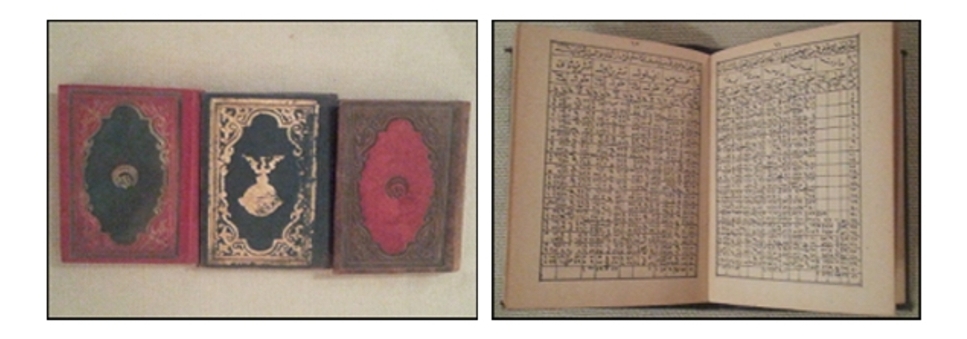
On a personal note, learning that the 35th Chief Munajjim Seyyid Mehmed Arif Efendi, was a maternal relative (the father-in-law of my mother’s aunt) was both surprising and thrilling news. Arif Kaman, a senior member of our family, who was named after his grandfather, told me he had some booklets, seals, and medals that belonged to his grandfather. One of my cousins arranged a family gathering and I vis¬ited them before publishing a version of my book on horary in Turkish.
LAND GIFTED BY THE SULTAN
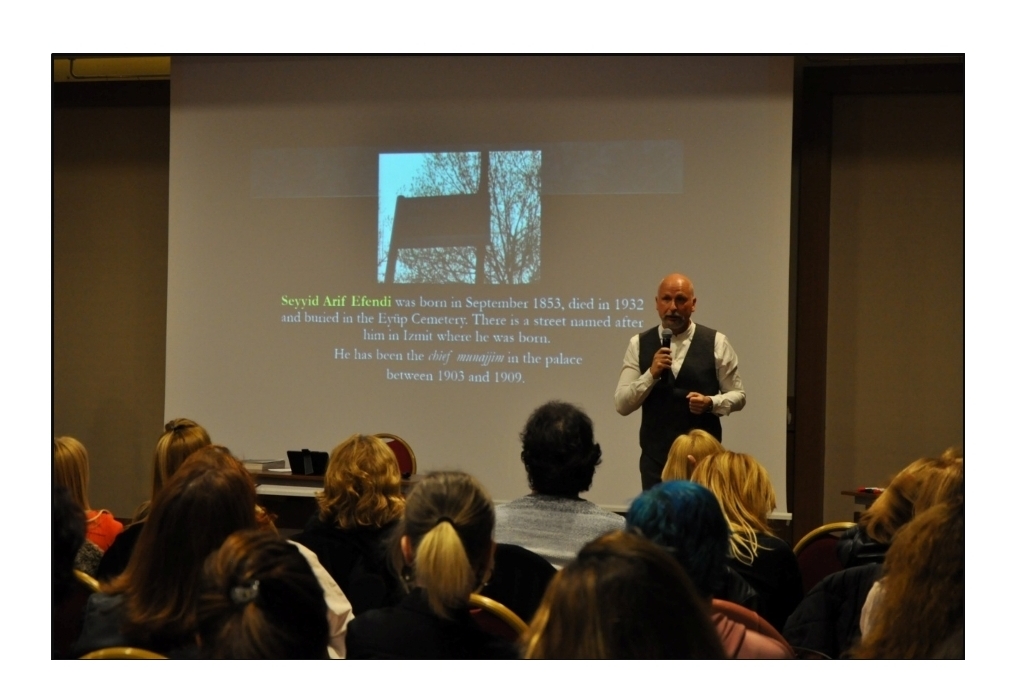
Seyyid Mehmed Arif Efendi (hereafter, Seyyid Mehmed), who served as the Chief Munajjim in the palace between 1903 and 1909, was born in July 1853 and died in October 23, 1932. He was buried in Eyup Cemetery. As he was born in the city of Iz¬mit, one of the streets in Izmit is named after him. During his career as a Chief Munajjim, he bought a mansion in the Suleymaniye district of Istanbul so as to be close to the palace. He also built a modest summer house for himself on the land granted to him by the Ottoman Sultan Vahdettin. He would seclude himself there for days, studying astrology to predict important future events, making calculations, and reporting his conclusions to the Sultan.
THE GRANDSON OF THE CHIEF ASTROLOGER
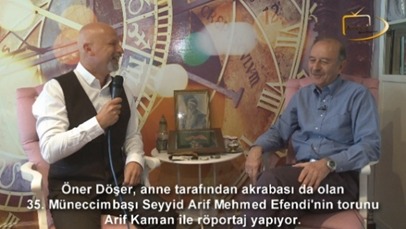
My older brother Arif, who is the grandson of the chief astrologer Seyyid Mehmed Arif Efendi and my mother’s cousin, told me many things about his grandfather in our conversation on YouTube. In those days, children were always given the names of their elders. That is, so that they would be remembered and not forgotten. My older brother Arif was given his grandfather’s name in that way.
AN INTELLECTUAL SCHOLAR
My relative Arif reported from his father that Seyyid Mehmed was trilingual, also speaking Arabic and Persian. He was a productive man, who worked across many disciplines, spending days on calculations in his library where he also wrote several books. While he was alive, his family gifted his works to the Islamic Arts Museum. Some are currently in Suleymaniye Library, and some Beyazit library now. I hope one day to research these books and make a compilation of them.
GREENWICH CONTACTS AND VISITS TO EGYPT
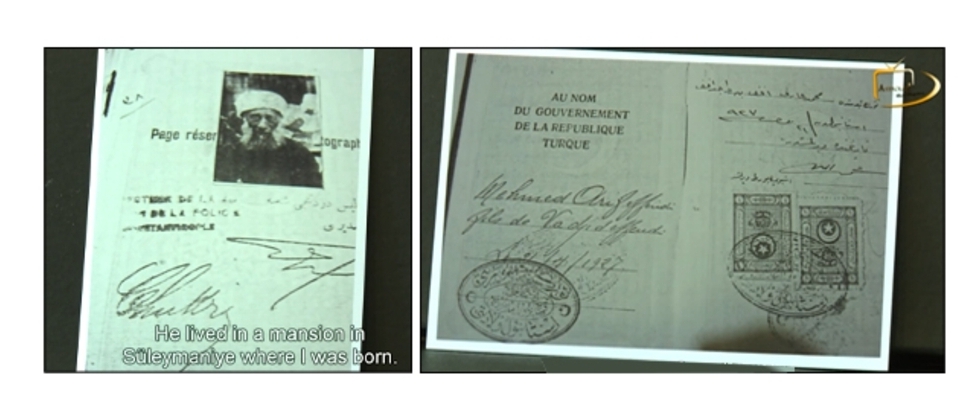
Like many Ottoman astrologers, Mehmed Arif Efendi was also knowledgeable in astronomy. As my elder Arif says: “They were in constant contact with the Greenwich Observatory. They were also in contact with Egypt. I found my grandfather’s passport the other day. He had traveled to Egypt several times. They also arranged for my grandfather to receive a pension from there, a small pension.”
HE PREDICTED THE TIME OF HIS OWN DEATH!
He prepared the nativities of his children and told them what was fated for them. For instance, he told his son Sacit (Arif’s father), he would not achieve high status, but nor would he be disgraced. He would be neither very happy nor very unhappy and he would have an average life. He also predicted his time of his death and told his family to be prepared on a certain day and time. Of course, no one in the family realized what he had prepared them for, until they were invited to their father’s house. When they arrived, they realized why their father told them to be there at that specific time.
HIS OFFICIAL DRESS, BINARY OF HONOR, STAMP
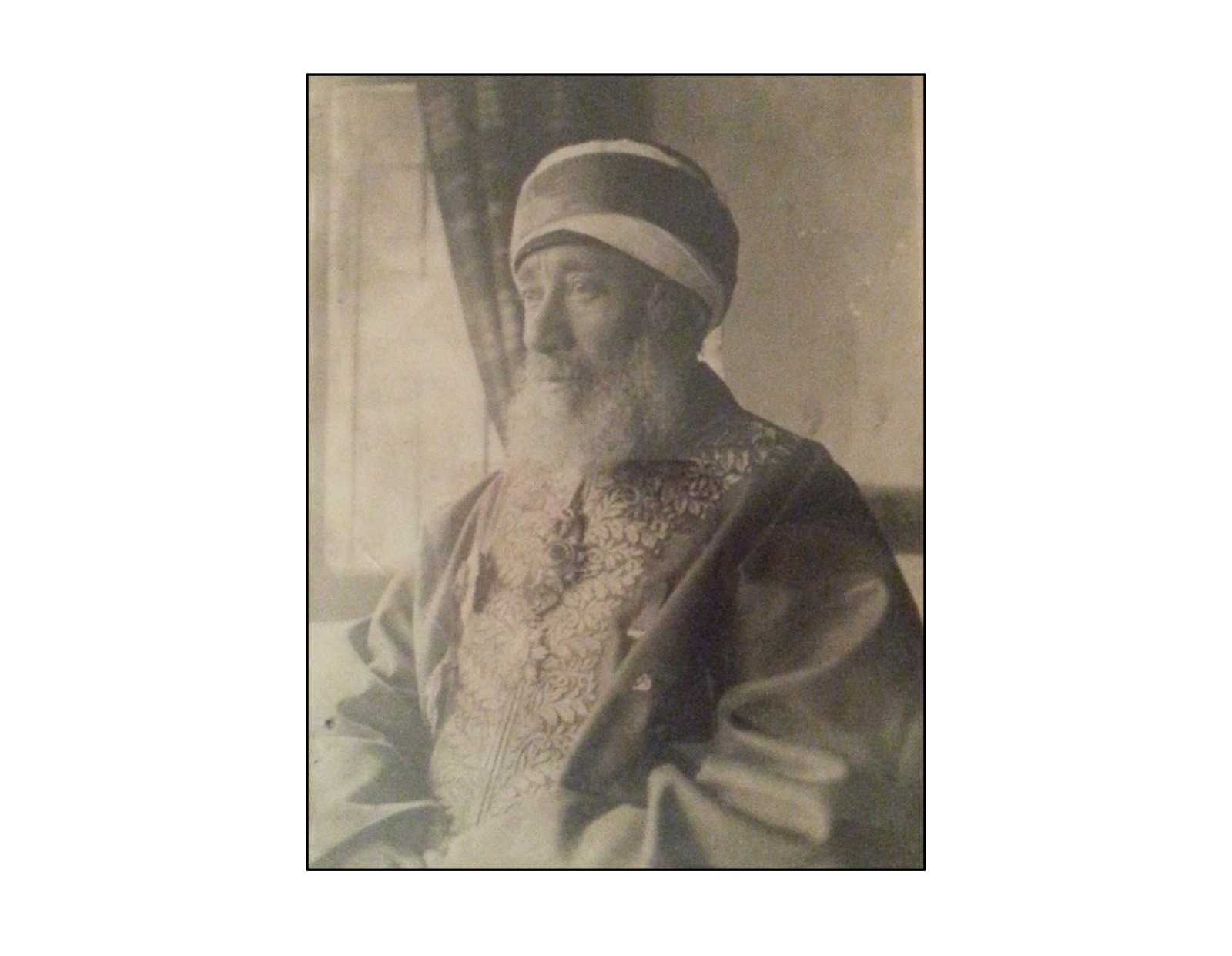
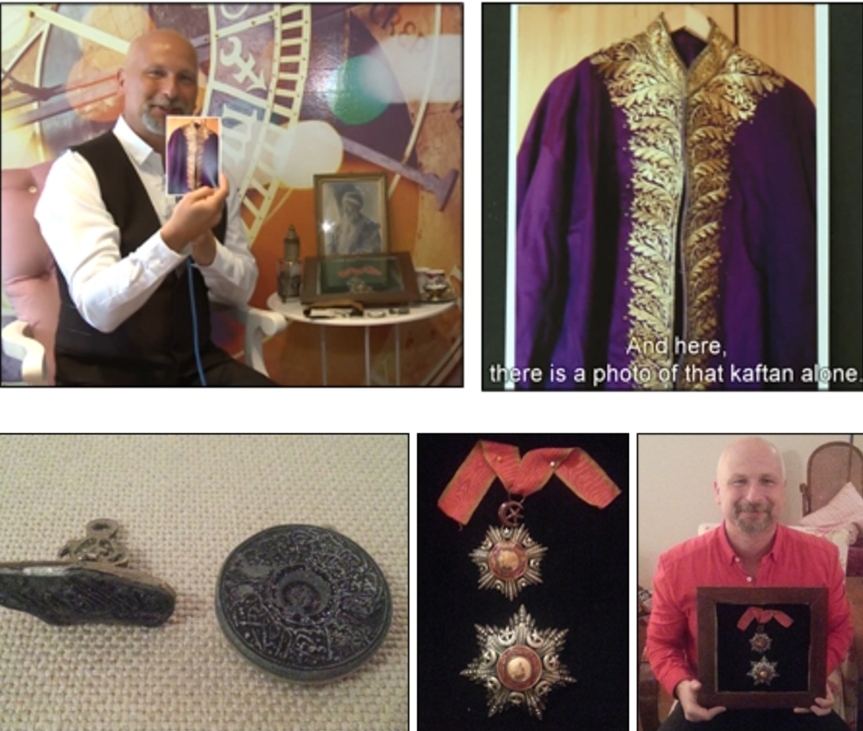
Arif carefully kept some things left by his grandfather, including a photograph of him in his official uniform. Arif and another cousin kept the medals, which are on the breast of his caftan in this photograph; this caftan was exhibited in a museum. An¬other of Arif’s cousins kept his professional license. Arif also showed me the official seals used by Seyyid Mehmed during his career as a Chief Munajjim. One of them, on which is written es-Seyyid Mehmed Arif 1316 is illustrated in Ayduz’s thesis, which is on the Chief Munajjims in the Ottoman Empire.
MANUSCRIPT IN THE BRITISH LIBRARY
On April 17, 2024 I got an email from Dr Bink Hallum who is Arabic Scientific Manuscripts Curator, The British Library, London. In this email, he was asking the burried date of Seyyid Mermed Arif Efendi and giving some information about him as you will see below:
“Dear Mr Döşer,
I have recently catalogued an Arabic astrological manuscript in the British Library collections that I am sure will interest you.
The manuscript contains a nineteenth-century copy of Revealing What Was Hidden Concerning Astrological Judgements (إظهار ما كان مستخفيًا في أحكام النجوم) by Najm al-Dīn Ayyūb ibn ʻAyn al-Dawlah ibn Naṣr Allāh al-Akhlāṭī al-Ḥāsib (نجم الدين أيوب بن عين الدولة بن نصر الله الأخلاطي الحاسب), an astrologer in the service of the Ayyubid sultan al-Malik al-Ṣāliḥ Najm al-Dīn Ayyūb ibn al-Malik al-Kāmil (الملك الصالح نجم الدين أيوب بن الملك الكامل, reg. 637-47/1240-49). The manuscript was purchased by the British Museum from Abdel Ghani Shehab in 1924 and is now held at theBritish Library under the shelfmark Or. 9511.
The reason I am sure the manuscript will interest you is not just its subject.
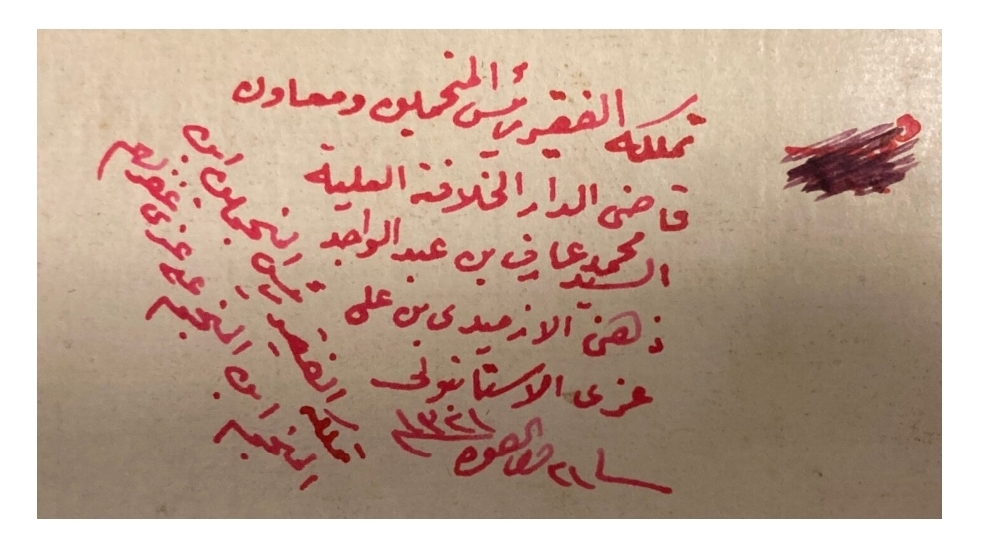
A note on a flyleaf at the beginning of the manuscript indicates that it was once owned by your relative Müneccimbaşı Seyyid Mehmed Arif Efendi.
I read this note as follows:
تملك الفقير رئيس المنجمين ومعاون
قاضي الدار (!) الخلافة العلية
السيد محمد عارف بن عبد الواجد
ذهني الإزميدي بن علي
عزي الإستانبولي
٢١ ذي القعدة سنة ١٣٢١
تملكه الفقير رئيس المنجمين ابن
المنجم ابن المنجم علي عزي غفر لهم
The humble Müneccimbaşı and Assistant
to the Qāḍī at [Istanbul] the Sublime Abode of the Caliphate
al-Sayyid Muḥammad ʿĀrif ibn ʿAbd al-Wājid
Dhihnī al-Izmīdī ibn ʿAlī
ʿIzzī al-Istānbūlī
acquired it [this manuscript] on
21 Dhū al-Qaʿdah in the year 1321 [8 February 1904]
The humble Müneccimbaşı, son of
the astrologer, son of the astrologer ʿAlī ʿIzzī, [God] forgive them
acquired it [this manuscript]
This manuscript is being catalogued in preparation for digitisation for the Qatar Digital Library. Unfortunately, the British Library has suffered a cyberattack that left its IT infrastructure in ruins. So, I’m afraid I can’t offer you a reliable prediction of when a digital copy of this manuscript will appear online. In the meanwhile, you can find a collection of photos I made of the manuscript here.”
HIS FATHER WAS ALSO AN ASTROLOGER
As can be understood from this text, Seyyid Mehmed Arif Efendi’s father was also an astrologer. He came from a cultured family and was an intellectual figure who knew several languages and read many books. In the 1920s, together with Fatin Gökmen, he established the library of the Kandilli Observatory and donated some of his own books to this library.
IMPORTANCE OF THE AUSPICIOUS HOUR
Seyyid Mehmed took great efforts to act at propitious times, which is why he al¬ways cast election charts for new ventures and arrangements in daily life, such as the time to go to the cottage, buying new garments, or putting them on. He was particularly meticulous about doing the right things at the right time. He would wait himself and others to start important tasks. My elder brother Arif recounts: For example, when a guest came to the house, he would say: “Make them wait five minutes. They wouldn’t accept immediately. They would wait for the opportune moment. After five minutes, they would invite them in. For example, if they bought a new outfit, they wouldn’t wear it right away. They would wait for the opportune moment to wear the new outfit, and only then would they wear it.”
AN IMPORTANT PART OF DAILY LIFE
People in the past really attached great importance to this. They would go to their summer homes at the appropriate time. Weddings would be held at the appropriate time. At least, some intellectual circles interested in astrology paid attention to these things. And it seems that, back then, astrology had become a part of everyday life. Of course, it continues to be a very important part of everyday life today…
Öner DÖŞER, AMA, CAPISAR
OPA Satellite for Türkiye
Member of APAI
Founder of AstroArt School of Astrology
www.astrolojiokulu.com/en
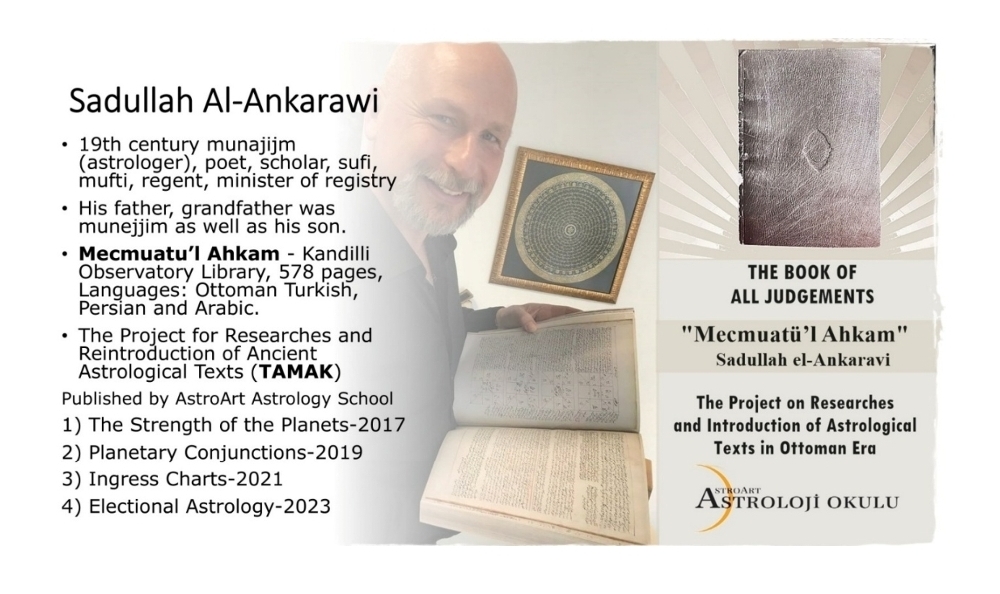
Öner DÖŞER, an astrologer, author, publisher, and educator, has dedicated the last 11 years of his 23 years long career in astrology to extensive research and studies on astrology in the Ottoman Empire. On April 9, 2015, he launched the “Research and Restoration of Historical Astrological Texts Project.” As part of this project, he commissioned translations of the 578-page work “Mecmuatu’l Ahkam” by the 19th-century astrologer Sadullah al-Ankarawi. Four of these translations have been published as books in both Turkish and English. Döşer continues to work on translations from this work and plans to offer online Ottoman Astrology courses in English in the spring of 2027. He is also preparing a documentary about the Chief Astrologers in the Ottoman Empire. A relative on his mother’s side of the family of the 35th Chief Astrologer, Seyyid Mehmed Arif Efendi, Döşer continues his research and studies on this scholar.